
Essential Weather Considerations for Dog Walking While Traveling
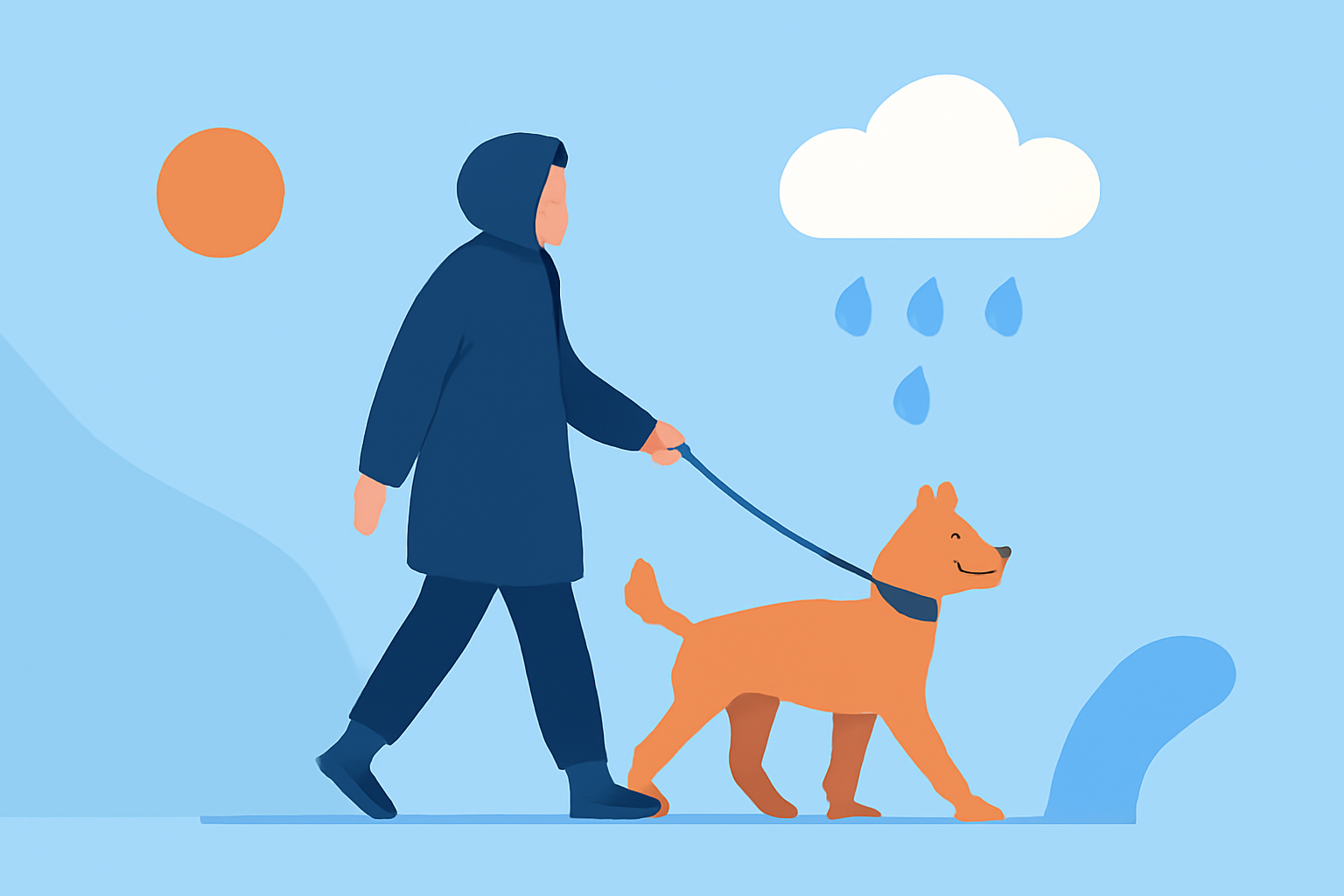
Traveling with your dog offers the opportunity to explore new places together. However, it's crucial to consider weather conditions to ensure both your safety and your dog's comfort during walks. This guide provides essential weather-related considerations and practical tips for dog walking while traveling.
1. How Does Temperature Affect Dog Walks?
Extreme temperatures can pose risks to your dog's health. In hot weather, pavement can become dangerously hot, potentially causing burns to your dog's paws. In cold conditions, exposure can lead to hypothermia or frostbite. It's advisable to avoid walking your dog when temperatures are above 85°F (29°C) or below 32°F (0°C). (goodrx.com)
2. What Are the Best Times to Walk Your Dog?
Timing your walks to avoid extreme temperatures is essential. In summer, early morning or late evening walks are preferable, as these times are cooler and more comfortable for your dog. In winter, midday walks are ideal when temperatures are warmer. (walksbuddy.com)
3. How Does Humidity Impact Dog Walks?
High humidity can make it harder for dogs to cool down through panting, increasing the risk of heat-related illnesses. When humidity exceeds 70%, it's advisable to limit the duration and intensity of walks. (walksbuddy.com)
4. What Should I Know About Pavement Temperature?
Pavement can absorb heat and become much hotter than the air temperature, potentially causing burns to your dog's paws. A general guideline is that if the pavement is too hot for your hand, it's too hot for your dog's paws. (chewy.com)
5. How Does Wind Affect Dog Walks?
Wind can significantly impact your dog's comfort. Strong winds can make cold temperatures feel even colder, increasing the risk of hypothermia. On windy days, consider shorter walks and ensure your dog is adequately protected. (walksbuddy.com)
6. What Are the Risks of Walking in Rain or Snow?
Wet conditions can lead to slippery surfaces, increasing the risk of falls for both you and your dog. Additionally, rain and snow can make it harder for dogs to regulate their body temperature, leading to hypothermia. If you must walk in these conditions, ensure your dog is dried off promptly afterward to prevent discomfort or illness. (dogster.com)
7. How Can I Prepare for Weather-Related Challenges?
-
Hot Weather: Walk during cooler parts of the day, provide fresh water, and avoid hot surfaces.
-
Cold Weather: Use appropriate clothing for your dog, limit walk duration, and watch for signs of discomfort.
-
Rain/Snow: Use waterproof gear, dry your dog thoroughly afterward, and be cautious of slippery surfaces.
8. How Can Clime Assist in Planning Safe Dog Walks?
Clime offers real-time weather updates and forecasts, allowing you to plan your dog walks around optimal conditions. By providing accurate and timely information, Clime helps ensure that both you and your dog can enjoy safe and comfortable walks, regardless of the weather.
Conclusion
Being mindful of weather conditions is vital for the safety and well-being of your dog during walks while traveling. By considering factors such as temperature, humidity, pavement heat, wind, and precipitation, and by utilizing tools like Clime for accurate weather information, you can ensure enjoyable and safe walks for both you and your canine companion.