
Weather Considerations for Dog Walking: A Comprehensive Guide
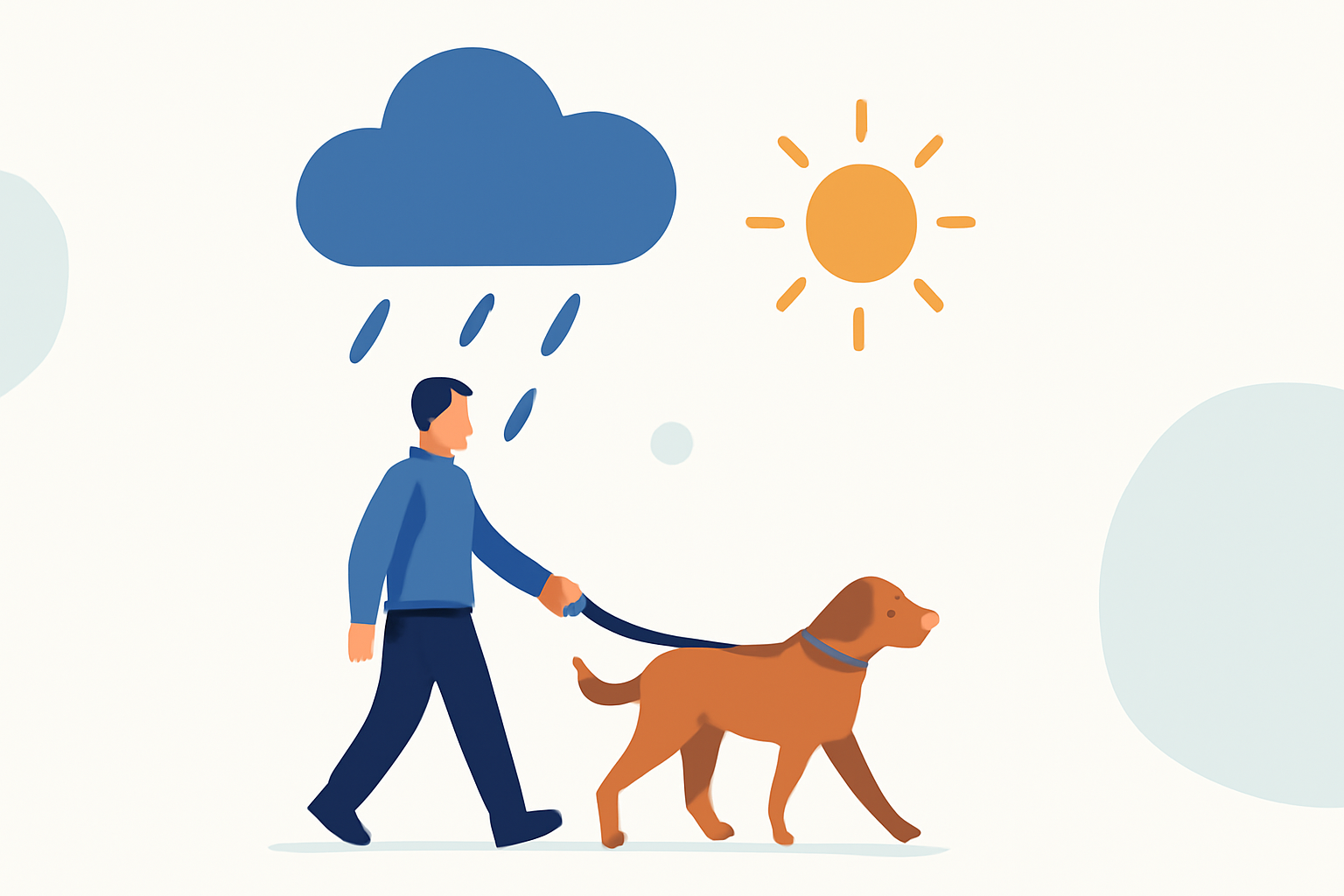
Walking your dog is essential for their physical and mental well-being. However, weather conditions can significantly impact the safety and comfort of both you and your pet. This guide provides expert advice on how to navigate dog walks in different weather scenarios.
How Does Temperature Affect Dog Walks?
Temperature plays a crucial role in determining the safety of your dog's walk. According to the American Kennel Club (AKC), temperatures above 85°F (29°C) can be dangerous for dogs, as pavement and asphalt can become extremely hot, potentially causing burns to your dog's paws. (goodrx.com)
What Are the Risks of Walking Dogs in Extreme Heat?
Heat-related illnesses, such as heatstroke, are common in dogs during summer months. Flat-faced breeds, like pugs and boxers, are particularly susceptible due to their compromised ability to cool down. To prevent overheating, it's advisable to walk your dog during the cooler parts of the day, such as early morning or late evening. (goodrx.com)
How Can I Protect My Dog's Paws in Hot Weather?
To safeguard your dog's paws from hot surfaces, consider walking on grass or shaded paths. Always carry water to keep your dog hydrated, and perform the "7-second pavement test" before every walk to ensure the ground isn't too hot for your dog's paws. (walksbuddy.com)
Is It Safe to Walk Dogs in Cold Weather?
Cold temperatures can also pose risks, especially for small, short-haired, or senior dogs. The AKC recommends limiting walks to 15 minutes if the temperature is below 20°F (-6°C), being mindful of your dog's coat type. (akcreunite.org)
What Are the Signs That My Dog Is Too Cold?
Watch for signs such as whining, shivering, or lifting paws off the ground, which indicate discomfort or cold stress. If you notice these signs, it's time to bring your dog inside and warm them up. (akcreunite.org)
How Can I Make Winter Walks More Comfortable for My Dog?
Dress your dog in a properly fitted, water-resistant coat to retain body heat. Booties can protect paws from ice, snow, and chemical deicers. Ensure any protective clothing is snug but not restrictive to avoid chafing. (akc.org)
What Are the Risks of Walking Dogs in Rainy Conditions?
Rain can make surfaces slippery, increasing the risk of falls. Additionally, wet conditions can lead to hypothermia if your dog becomes too cold. To mitigate these risks, consider using a waterproof coat for your dog and choose routes with adequate drainage to avoid puddles. (dogster.com)
How Can I Train My Dog to Walk in Rain or Snow?
Gradually introduce your dog to wet conditions by starting with short walks and rewarding them with treats and praise. This positive reinforcement can help your dog build a tolerance to walking in less-than-ideal weather. (akc.org)
When Should I Avoid Walking My Dog?
If the weather conditions are extreme—such as during thunderstorms, heavy rain, or extreme heat or cold—it's best to keep your dog indoors. Always prioritize your dog's safety and comfort when deciding whether to go for a walk.
How Can I Ensure My Dog Gets Enough Exercise During Inclement Weather?
On days when outdoor walks aren't feasible, consider indoor activities like playing fetch, using puzzle toys, or engaging in training sessions to keep your dog mentally and physically stimulated.
By understanding and adapting to various weather conditions, you can ensure that your dog remains healthy, happy, and safe during walks.
Highlights:
- Cold weather tips to keep your pets safe, Published on Wednesday, December 10