
Weather Considerations for Dog Walking: A Guide for Athletes
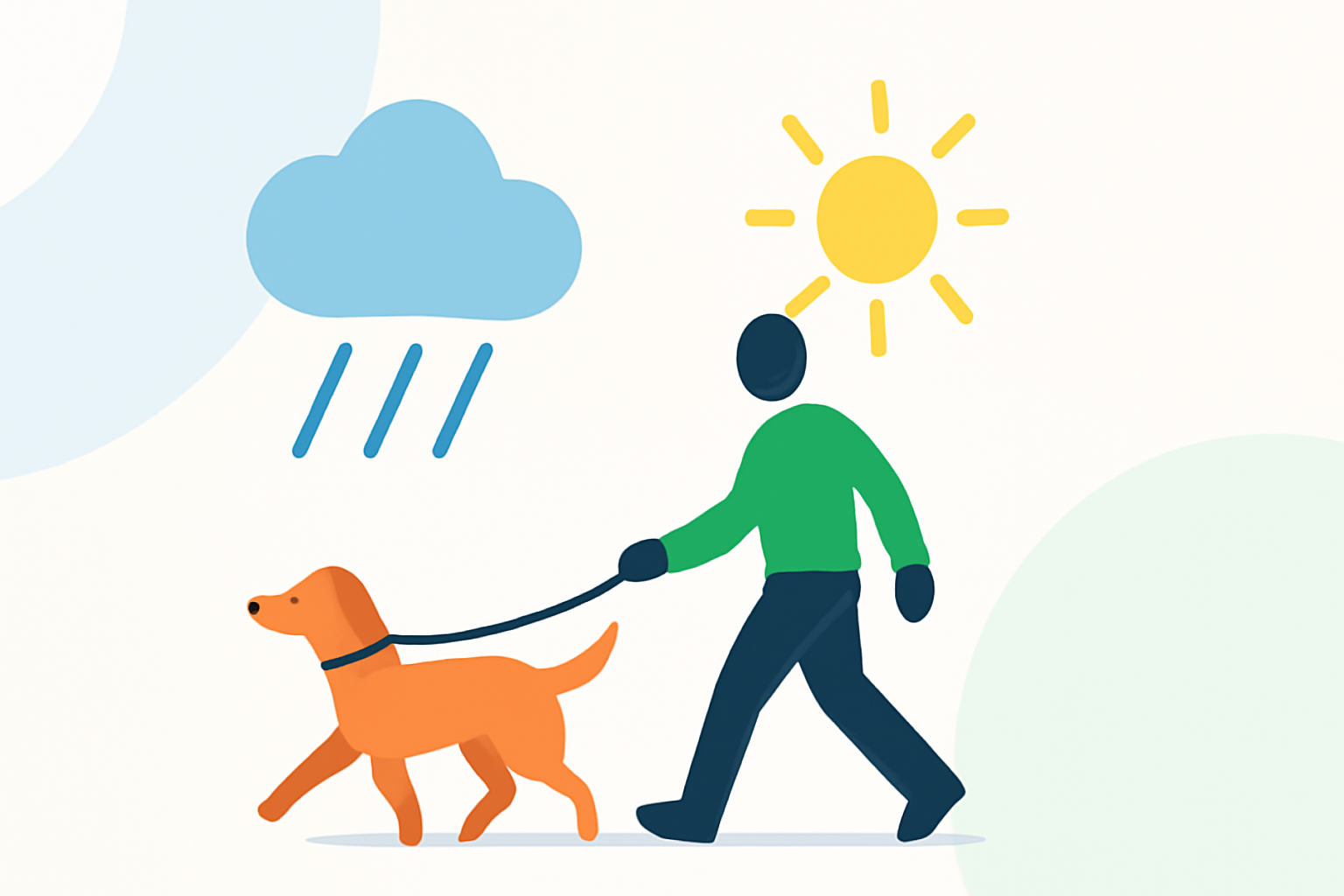
As an athlete, incorporating dog walks into your training routine can be both beneficial and enjoyable. However, understanding how various weather conditions impact your dog's comfort and safety is crucial. This guide provides essential tips to ensure your canine companion remains healthy and happy during your walks.
How Does Temperature Affect Dog Walking?
Temperature plays a significant role in your dog's well-being during walks. Here's a general guideline:
-
Below 32°F (0°C): Cold temperatures can be harsh on dogs, especially small or short-haired breeds. It's advisable to limit outdoor time to short potty breaks or brisk play unless your dog is a cold-tolerant breed. (petco.com)
-
32°F to 50°F (0°C to 10°C): Many dogs can handle these temperatures, but small or short-haired breeds may need a coat. (walksbuddy.com)
-
50°F to 68°F (10°C to 20°C): Ideal for most dogs, allowing for comfortable and extended walks. (walksbuddy.com)
-
68°F to 77°F (20°C to 25°C): Warm temperatures; ensure your dog has access to water and avoid strenuous activity. (walksbuddy.com)
-
Above 77°F (25°C): High heat increases the risk of overheating. Limit walks to early morning or evening hours, keep them short, and provide plenty of water. (woofies.com)
What Are the Risks of Walking Dogs in Extreme Temperatures?
-
Cold Weather Risks: Exposure to cold can lead to hypothermia and frostbite. Small, short-haired, or senior dogs are particularly vulnerable. (petmd.com)
-
Hot Weather Risks: Heatstroke is a significant concern, especially in high humidity. Dogs with flat faces, like Bulldogs and Pugs, are more susceptible due to their compromised ability to cool down. (woofies.com)
How Can Humidity and Wind Affect Dog Walks?
-
Humidity: High humidity impairs a dog's ability to cool down through panting, increasing the risk of heat-related illnesses. (woofies.com)
-
Wind: Wind can make cold temperatures feel even colder, increasing the risk of hypothermia. On windy days, stick to sheltered routes and keep walks shorter. (dogyyc.com)
What Are the Best Times to Walk My Dog?
-
Summer Months: Opt for early morning or late evening walks to avoid peak heat. (walksbuddy.com)
-
Winter Months: Midday walks are ideal when temperatures are warmer. (walksbuddy.com)
How Can I Protect My Dog's Paws During Walks?
-
Pavement Temperature: Before walking, place your hand on the pavement for five seconds. If it's too hot for your hand, it's too hot for your dog's paws. (dogchart.com)
-
Booties: Consider using dog booties to protect paws from hot surfaces, ice, and salt. (dogyyc.com)
What Are the Signs That My Dog Is Uncomfortable During a Walk?
-
In Hot Weather: Watch for heavy panting, slowing down, or stopping. (dogchart.com)
-
In Cold Weather: Signs include lifting paws repeatedly, shivering, or whining. (petful.com)
How Can I Ensure a Safe Walk for My Dog?
-
Stay Informed: Check the weather forecast before heading out.
-
Hydration: Always carry water for both you and your dog.
-
Shorter Walks: In extreme temperatures, opt for shorter, more frequent walks.
-
Know Your Dog: Understand your dog's breed, age, and health status to tailor walks accordingly.
By considering these factors, you can ensure that your dog remains comfortable and safe during your athletic walks, regardless of the weather conditions.
Highlights:
- 5 Tips for Walking Your Dog in the Winter | PetMD, Published on Tuesday, December 12
- 5 Tips For Walking Your Dog In The Winter, Published on Tuesday, January 20
- Walking Your Dog in the Winter: 6 Tips | Great Pet Care, Published on Thursday, October 30