
Weather Considerations for Safe Pet Walking: A Step-by-Step Guide
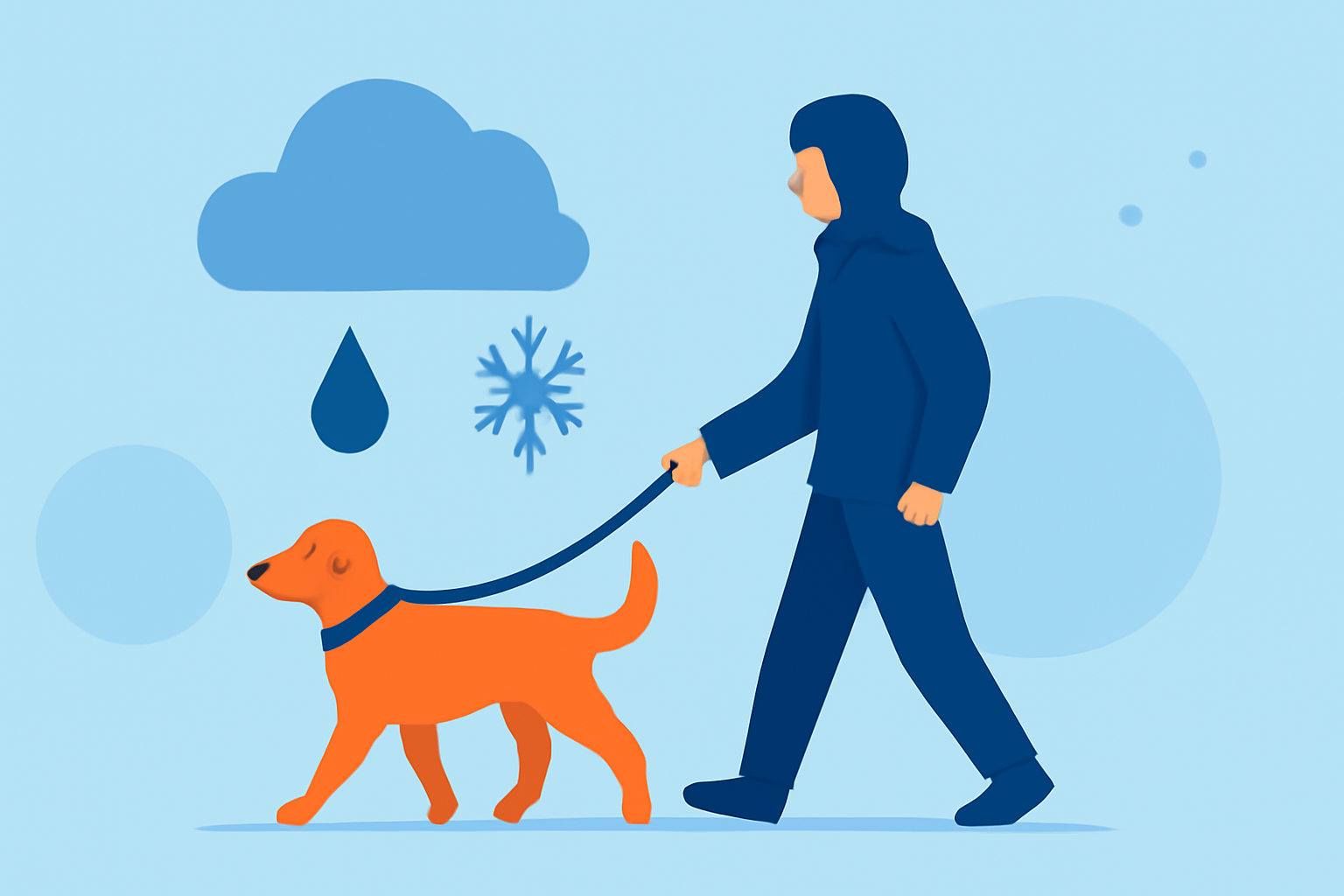
Ensuring your pet's safety during walks requires careful consideration of weather conditions. Extreme temperatures, humidity, and other factors can pose risks to your pet's health. Here's a step-by-step guide to help you assess and adapt to various weather conditions.
1. How Do Temperature Extremes Affect Pet Walks?
-
Cold Weather: Temperatures below 45°F (7°C) can be uncomfortable for many dogs. Below freezing (32°F or 0°C), limit outdoor time to short potty breaks or brisk play unless your dog is a cold-tolerant breed. (petco.com)
-
Hot Weather: Once the temperature rises above 80°F (27°C), even heat-tolerant breeds can overheat quickly. Limit exercise, avoid midday heat, and ensure constant access to fresh water and shade. (petco.com)
2. What Are the Risks of High Humidity During Walks?
High humidity impairs your dog's ability to cool down through panting, increasing the risk of heat-related illnesses. Always monitor your pet for signs of overheating, such as excessive panting, drooling, or lethargy. (woofies.com)
3. How Does Surface Temperature Impact Pet Safety?
Pavement and asphalt can become significantly hotter than the air temperature, potentially causing burns to your dog's paw pads. On sunny days, pavement can hold heat long after the air starts to cool. (woofies.com)
4. What Are the Signs That It's Too Hot or Cold for a Walk?
-
Too Hot: If it's too hot for you to be outside comfortably, it's likely too hot for your pet as well. (axios.com)
-
Too Cold: If it's too cold for you to be outside comfortably, it's likely too cold for your pet as well. (axios.com)
5. How Can I Safely Walk My Pet in Extreme Weather?
-
Cold Weather: Dress your pet in a coat or sweater, especially if they have short fur or are small breeds. Limit walks to short durations and monitor for signs of discomfort. (banfield.com)
-
Hot Weather: Walk during the cooler parts of the day, such as early morning or late evening. Keep walks short and provide plenty of water. (banfield.com)
6. How Can I Protect My Pet's Paws During Walks?
-
Hot Surfaces: Test the pavement with your hand; if it's too hot to hold for five seconds, it's too hot for your pet's paws. (dogyyc.com)
-
Cold Surfaces: After snowy walks, clean paws to remove ice and salt. Consider paw wax or boots in winter. (dogyyc.com)
7. What Are the Best Times to Walk My Pet?
-
Summer: Walk early in the morning or late in the evening to avoid midday heat. (dogyyc.com)
-
Winter: Midday walks are ideal when the sun provides some warmth. (dogyyc.com)
8. How Can I Tell If My Pet Is Too Hot or Cold?
-
Signs of Overheating: Excessive panting, drooling, lethargy, or vomiting.
-
Signs of Cold Stress: Shivering, reluctance to move, lifting paws, or whining. (seattle.gov)
9. How Can I Keep My Pet Active During Inclement Weather?
If it's too hot or cold for walks, consider indoor activities like playing fetch, using puzzle toys, or setting up playdates with other pets. (axios.com)
10. How Can I Stay Informed About Local Weather Conditions?
Utilize reliable weather apps or websites to check current conditions and forecasts. Some platforms offer pet-specific weather advisories to help you plan safe walks.
By staying informed and attentive to your pet's needs, you can ensure enjoyable and safe walks regardless of the weather.
Highlights:
- Cold weather tips to keep your pets safe, Published on Wednesday, December 10
- Scorching heat can make dog walking dangerous, Published on Wednesday, August 23