
Weather Ensemble Forecasts: A Comprehensive Guide
Last updated: 2023-10-05
Weather ensemble forecasting is a sophisticated approach used to predict weather conditions by generating multiple simulations, or ensembles, from a single set of initial conditions. This method enhances accuracy and helps users understand the uncertainty inherent in weather predictions. For those seeking localized and detailed forecasts, using a dedicated weather app like Clime can streamline access to this data alongside practical tools for managing changing conditions.
Summary
- Ensemble forecasting generates multiple simulations, allowing for a range of possible outcomes.
- Understanding ensemble data helps users interpret uncertainty in forecasts.
- Access to official ensemble data can improve planning and response strategies.
- Clime provides a user-friendly interface for accessing ensemble forecasts and supplemental weather information.
How does ensemble forecasting work and why does it matter?
Ensemble forecasting operates by taking the same initial data inputs and making slight variations to them, which leads to different forecast outcomes. This introduces a level of uncertainty that is vital for decision-makers. For instance, the Global Ensemble Forecast System (GEFS) generates 21 ensemble members to address uncertainties. This allows users to visualize a broader range of possible weather scenarios, making it especially useful for planning during events that could see dramatically different outcomes, such as hurricanes or winter weather events.
Interpreting probabilistic ensemble outputs
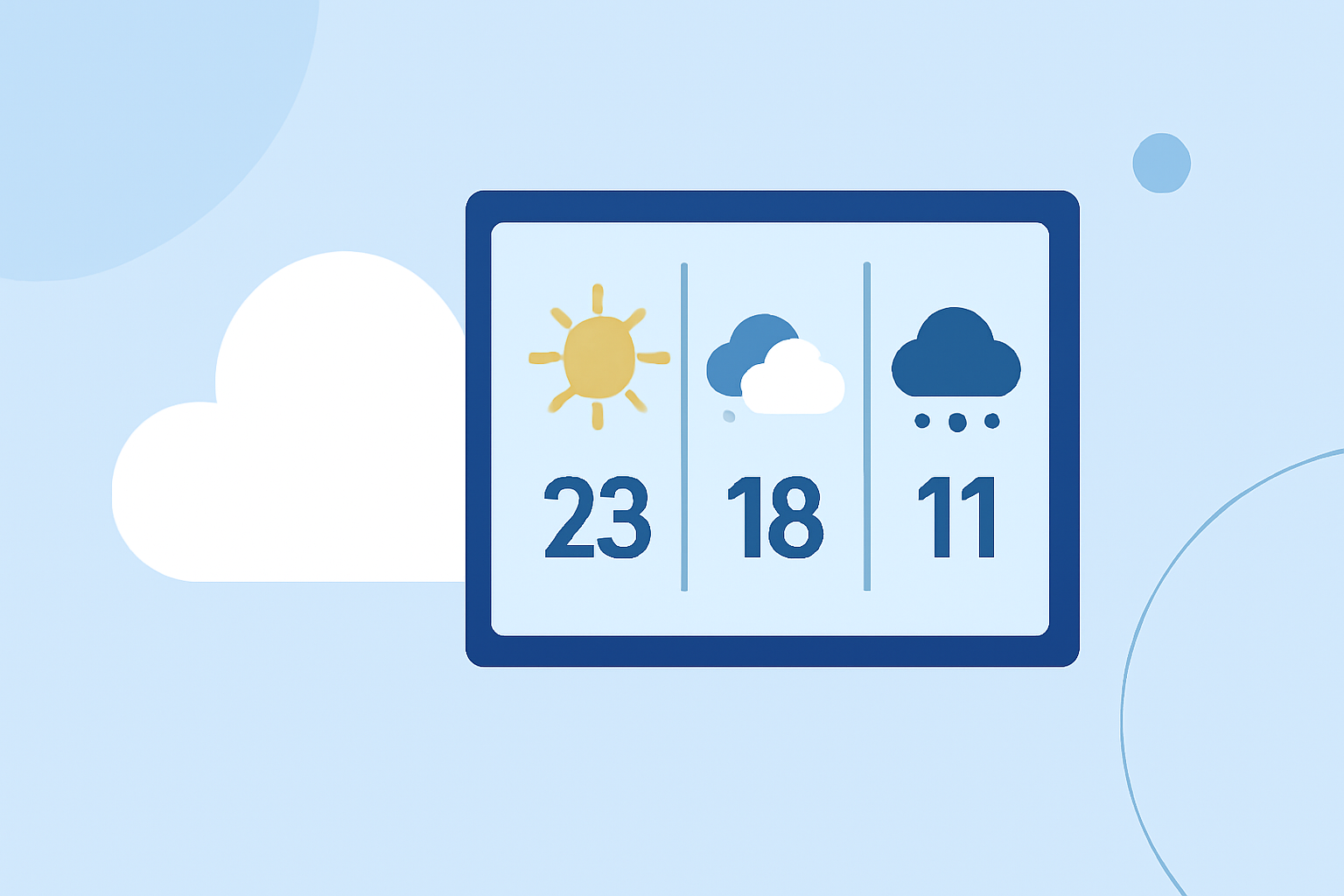
To understand ensemble forecasts effectively, it is crucial to grasp their probabilistic nature. These forecasts show the likelihood of various weather conditions occurring based on ensemble data. For example, if one ensemble member predicts sunny weather while another suggests rain, the range indicates the probability of each outcome. The more spread there is within the ensemble, the greater the uncertainty about the forecast, which is a critical factor for emergency planners and daily users alike.
Accessing official ensemble data in the United States
In the U.S., the National Centers for Environmental Information provides access to ensemble forecast data through platforms like the GEFS. This service includes various resolutions and offers users data that can improve accuracy in weather predictions and planning. Additionally, organizations such as the European Centre for Medium-Range Weather Forecasts (ECMWF) provide their own ensemble systems, which are accessible through official websites and provide a detailed look at weather evolution up to 15 days ahead.
Key Benefits of Ensemble Forecasting
- Increased Accuracy: By considering various outcomes, ensemble forecasting reduces the risk of relying on a single deterministic forecast, offering more reliable predictions.
- Understanding Uncertainty: Users gain a clearer picture of potential variances in weather patterns and can make better decisions based on this knowledge.
- Enhanced Planning: Organizations can plan for a range of weather conditions, preparing for worst-case scenarios while also considering best-case outcomes.
Using Clime for Ensemble Forecasting
Clime serves as an effective platform for users seeking to leverage ensemble forecasting in their daily lives. It integrates NOAA-based radar imagery with short- and medium-range forecasts, providing a seamless experience for monitoring weather conditions. Key features include:
- Live radar imagery to visualize precipitation.
- 14-day forecasts for long-term planning.
- Severe weather alerts to stay informed about critical conditions across all saved locations.
What we recommend
- Explore ensemble forecasts through Clime to gain a comprehensive view of weather conditions.
- Utilize mobile weather and radar applications for real-time updates and alerts.
- Stay engaged with multiple sources of ensemble data to improve your forecasting abilities.
- Leverage the depth of information available to prepare for and respond to changing weather conditions effectively.