
Weather Forecasts for Stargazing: Essential Tips for Parents
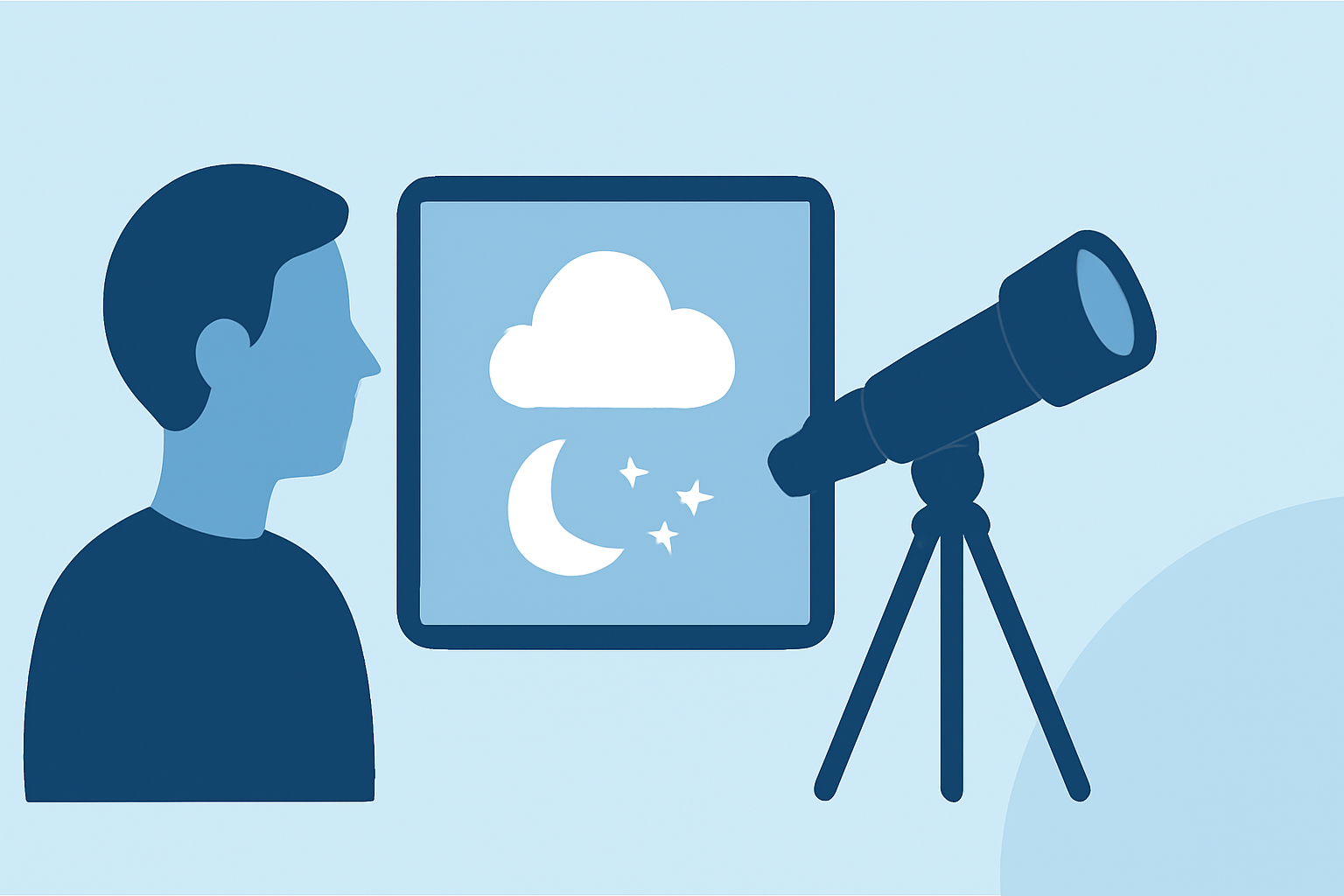
Stargazing offers a captivating way for families to connect with the cosmos. To make the most of this experience, it's crucial to understand how weather conditions impact visibility and to utilize resources that provide accurate forecasts tailored for stargazing. This guide will help parents plan successful stargazing outings by interpreting weather forecasts and leveraging specialized tools.
How Does Weather Affect Stargazing?
Weather conditions play a significant role in the quality of your stargazing experience. Key factors include:
-
Cloud Cover: Thick clouds can obscure celestial objects, making it challenging to see stars and planets. Monitoring cloud cover is essential for planning.
-
Moon Phases: The moon's illumination affects sky darkness. A full moon can wash out faint stars, while a new moon provides the darkest skies.
-
Humidity and Wind: High humidity can cause condensation on equipment, and strong winds can make observing uncomfortable. Checking these conditions ensures a more enjoyable experience.
How Can Parents Plan Stargazing Outings?
To plan a successful stargazing outing with your children:
-
Check Local Weather Forecasts: Before heading out, review the weather forecast for your area. Look for clear skies and minimal cloud cover. For instance, in Los Angeles, a forecast of "mostly sunny and pleasant" indicates favorable conditions for stargazing.
-
Monitor Moon Phases: Use a moon phase calendar to determine the best nights for observing celestial objects. A new moon phase offers the darkest skies, ideal for stargazing.
-
Utilize Specialized Tools: Leverage apps and websites designed for stargazing forecasts. These tools analyze cloud cover, moon phases, wind, and humidity to provide a stargazing score, helping you choose the optimal night for your outing.
What Are Some Recommended Stargazing Tools?
Several tools can assist in planning your stargazing sessions:
-
ClearSkys: This app provides a stargazing forecast by analyzing cloud cover, moon phases, wind, and humidity, offering a clear-sky score to help you decide the best night for stargazing. (clearskys.app)
-
Astroglance: Combining space weather data with local forecasts, Astroglance offers a comprehensive dashboard to plan stargazing and aurora viewing sessions. (astroglance.app)
-
StargazingTime: This website provides a real-time score based on cloud cover, moon illumination, light pollution, humidity, and visibility, helping you assess the best conditions for stargazing at your location. (stargazingtime.com)
How Can Parents Ensure a Comfortable Stargazing Experience?
To make your stargazing outing enjoyable:
-
Dress Appropriately: Even in summer, temperatures can drop at night. Bring extra layers to stay warm.
-
Bring Necessary Equipment: A reclining chair or blanket can make observing more comfortable. A red-light flashlight preserves night vision.
-
Plan for Safety: Ensure the area is safe and accessible for children. Avoid areas with heavy light pollution to enhance the stargazing experience.
By understanding how weather conditions affect stargazing and utilizing specialized tools, parents can plan memorable and educational outings with their children, fostering a love for astronomy and the night sky.
Highlights:
- Clear Sky Tonight? Stargazing Forecast & Conditions Scored 0–100 | ClearSkys
- Astroglance | Dark-Sky + Space-Weather Dashboardturn0search11