
An Introduction to Weather for Orchid Growing for Pet Owners
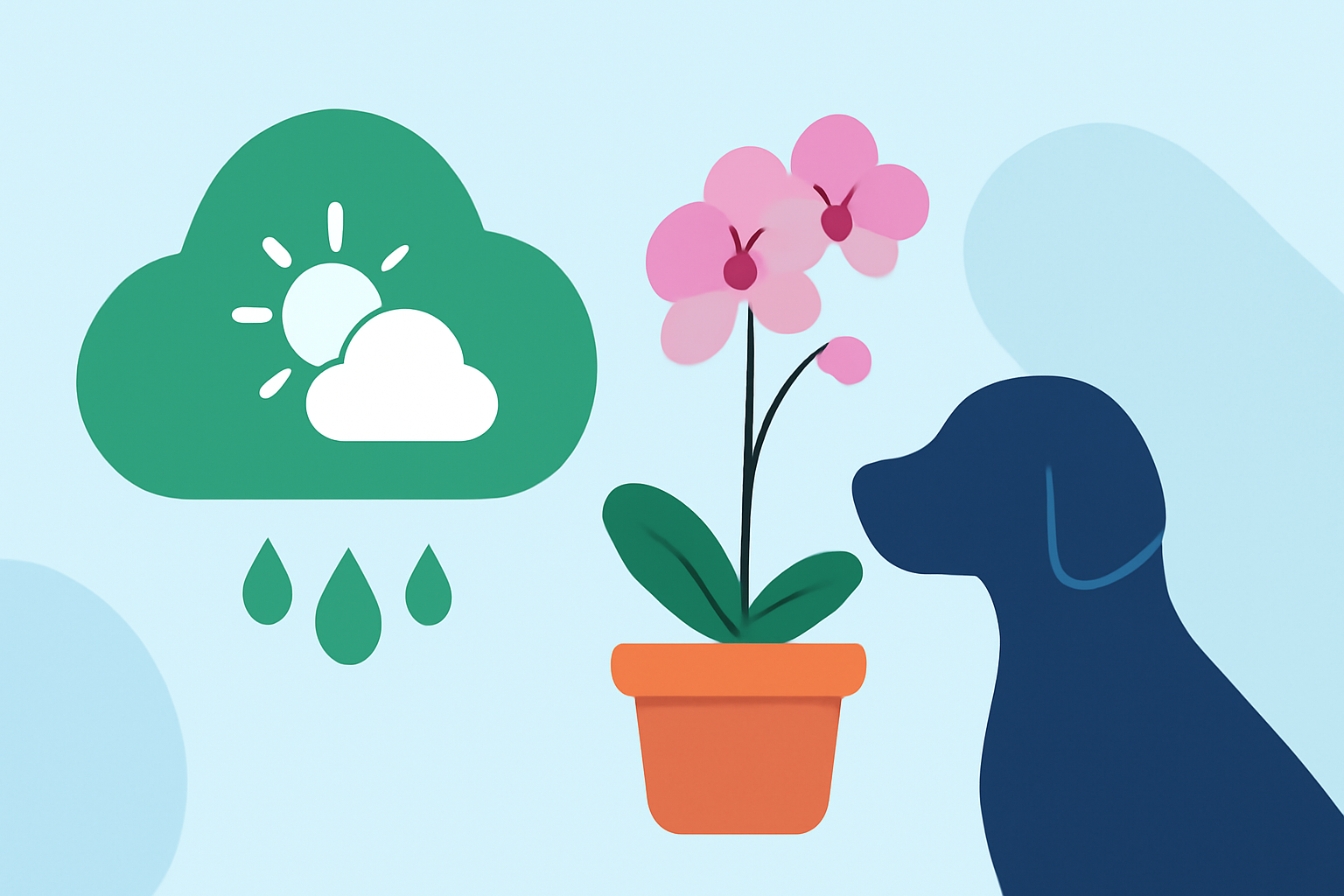
Orchids are exquisite plants that thrive in specific environmental conditions. As a pet owner, it's essential to understand how weather influences orchid growth and how to maintain a safe environment for your furry friends.
Understanding Orchid Temperature Needs
Orchids, particularly Phalaenopsis (moth orchids), flourish in temperatures that align with human comfort:
- Daytime: 70–80°F (21–27°C)
- Nighttime: 60–70°F (16–21°C)
These conditions mimic their native tropical habitats, promoting healthy growth and blooming. (westerlay.com)
Humidity Levels and Orchid Health
Orchids require humidity levels between 50–70% to thrive. In drier indoor environments, especially during winter, maintaining adequate humidity is crucial. To increase humidity:
- Humidity Trays: Place a shallow tray filled with pebbles and water beneath the orchid pot, ensuring the pot sits above the water line.
- Grouping Plants: Arrange multiple orchids together to create a microclimate with higher humidity.
- Humidifiers: Use a room humidifier to maintain consistent moisture levels.
Avoid misting orchids directly, as water collecting in leaf joints can lead to rot. (plantcareai.app)
Light Requirements for Orchids
Orchids thrive in bright, indirect light. An east or west-facing window is ideal. Direct sunlight can scorch their leaves, so ensure they receive filtered light. (hgic.clemson.edu)
Pet Safety Considerations
Good news for pet owners: most common orchid species, including Phalaenopsis, Cymbidium, Dendrobium, and Oncidium, are non-toxic to cats and dogs. However, it's wise to monitor your pets to prevent them from nibbling on plants, which can lead to mild digestive upset. (catsafeplant.com)
Creating an Optimal Environment
To replicate the orchid's natural habitat:
- Temperature: Maintain a consistent indoor temperature within the recommended range.
- Humidity: Implement the methods mentioned above to ensure adequate moisture in the air.
- Airflow: Ensure good air circulation around your orchids to prevent fungal diseases.
By understanding and adjusting to these environmental factors, you can create a thriving space for your orchids while keeping your pets safe.
Highlights:
- Getting an Orchid to Rebloom is Easier Than You Think - 5 Expert-Approved Ways to Trigger Spectacular Repeat Blooms, Published on Wednesday, January 28