
Mastering Weather Radar Maps During Hurricane Season
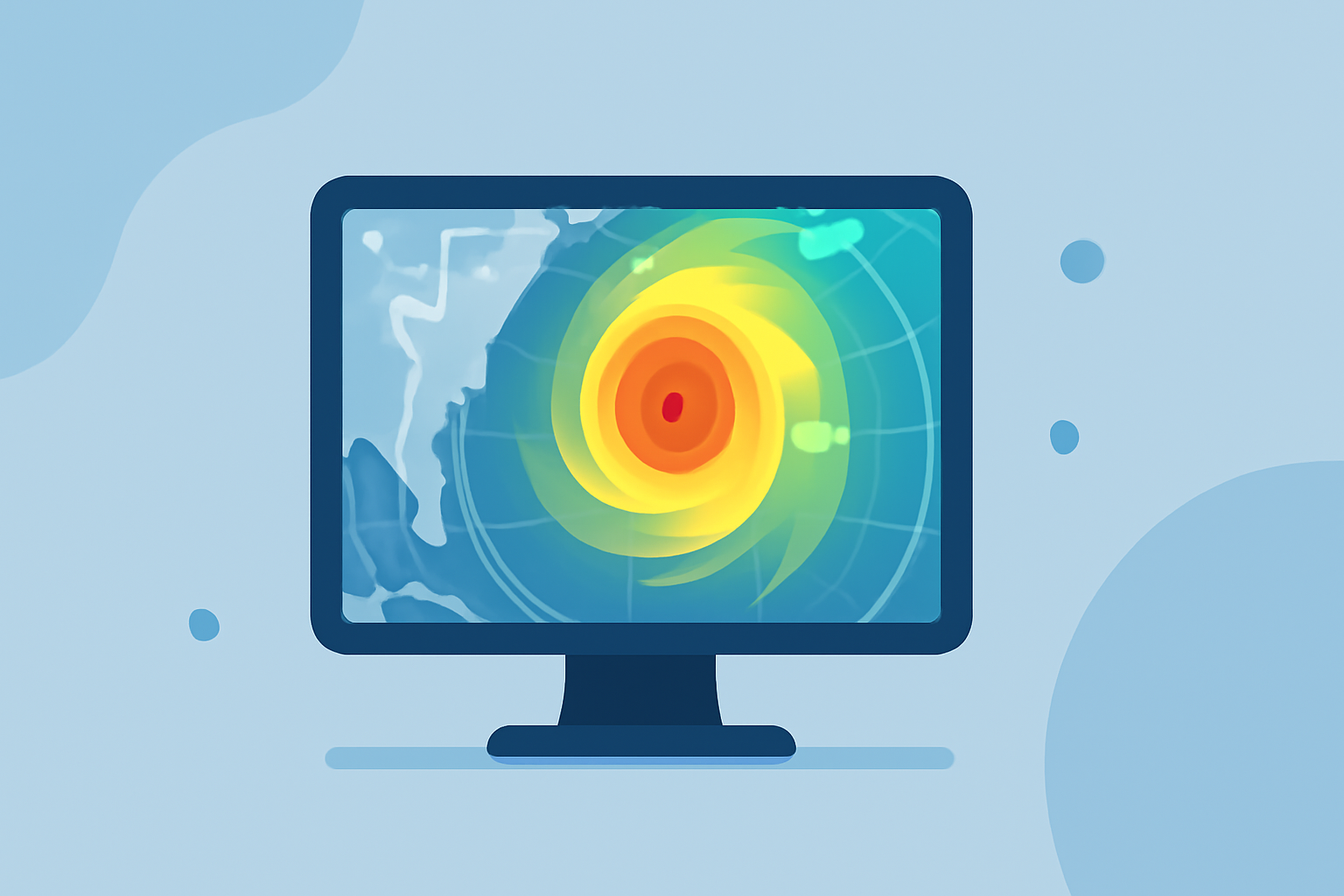
Hurricane season demands vigilance, and understanding weather radar maps is crucial for staying informed and safe. Here's how to effectively utilize these tools:
What Are Weather Radar Maps?
Weather radar maps display precipitation intensity and movement by emitting energy pulses and measuring their return after bouncing off particles like raindrops or hail. The resulting images, color-coded from light (green) to intense (red/purple), help visualize storm patterns. (climeradar.com)
How Do Hurricanes Appear on Radar?
In radar imagery, hurricanes manifest as:
-
Outer and Inner Rain Bands: Curved arcs of showers and thunderstorms.
-
Eyewall: A tight ring of very heavy precipitation around the storm's center.
-
Feeder Bands and Squall Lines: Lines of storms extending away from the center. (climeradar.com)
How to Read Radar Maps Effectively?
-
Zoom to Your Location: Center the map on your area to see relevant storm data.
-
Identify the Storm's Center and Eyewall: Look for a circular region with intense colors (red/purple) indicating heavy precipitation.
-
Monitor Storm Bands: Focus on rain bands moving toward your location, noting their speed and direction.
-
Use Animation: Activate the radar loop to observe storm movement over time, helping predict arrival times. (climeradar.com)
How Often Do Radar Updates Occur?
Radar scans update approximately every 5–10 minutes, so expect a slight delay in real-time data. Utilize radar loops to understand storm progression and anticipate its impact. (climeradar.com)
How to Stay Informed?
Pair radar observations with official alerts from the National Weather Service (NWS) for comprehensive information. Many weather apps offer real-time alerts and detailed radar views to keep you updated. (weather.com)
By mastering weather radar maps, you can effectively monitor hurricanes, interpret storm data, and make informed decisions to ensure your safety during hurricane season.
Highlights:
- Hurricane Radar Tracking: How to Stay Ahead of the Storm with Clime | Clime Blog, Published on Monday, March 09
- Storm Radar iOS App: Advanced Storm Tracking and Weather Alerts
- Hurricane season - Track hurricanes on the app – Weather News