
Essential Weather Safety Tips for Dog Walking Parents
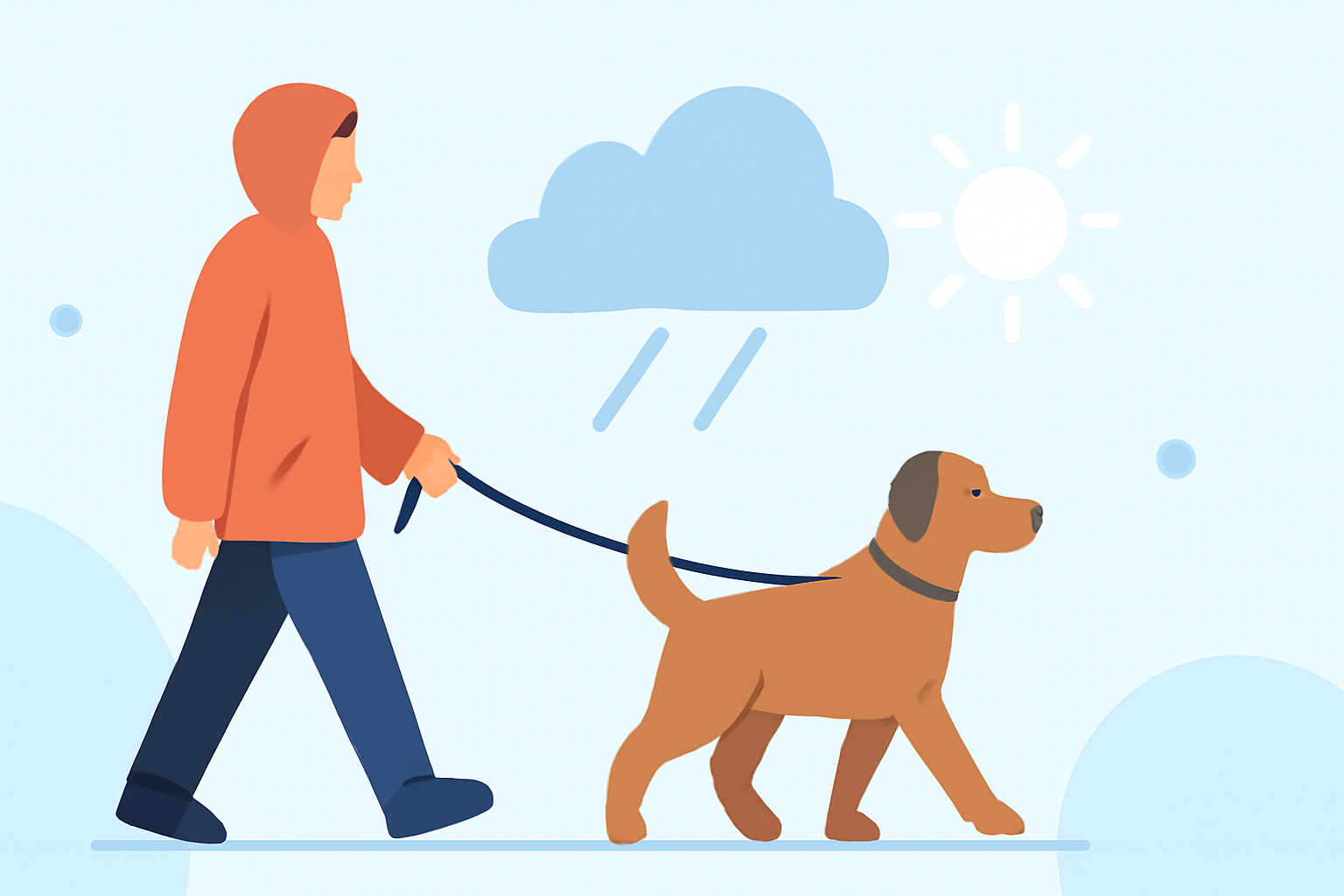
As a parent, ensuring your dog's safety during walks is paramount. Weather conditions significantly influence your dog's well-being, so it's essential to adapt your walking routine accordingly.
How Does Weather Affect Dog Walking?
Extreme temperatures, whether hot or cold, can pose health risks to dogs. High heat can lead to heatstroke, while cold can cause hypothermia. Additionally, wet conditions can make surfaces slippery, increasing the risk of injury.
What Are the Signs That It's Too Hot or Cold for a Dog Walk?
-
Hot Weather: Temperatures above 85°F (29°C) can be dangerous for dogs. Pavement and asphalt can become extremely hot, potentially causing burns to your dog's paws. (goodrx.com)
-
Cold Weather: If temperatures drop below freezing (32°F or 0°C), it's advisable to limit walks to 10-15 minutes. Short-haired, small, senior, and toy breeds are particularly susceptible to cold. (goodrx.com)
How Can I Safely Walk My Dog in Hot Weather?
-
Choose the Right Time: Opt for early morning or late evening walks to avoid the hottest part of the day. (chewy.com)
-
Stay Hydrated: Always carry water for both you and your dog. Offer your dog water breaks every 15–20 minutes, especially on hot, humid days. (petmd.com)
-
Protect Their Paws: Pavement can become extremely hot and uncomfortable for your dog. Avoid hot surfaces and consider using dog booties or applying paw balm to create a protective barrier. (petmd.com)
-
Seek Shade: Find walking paths that offer shade to minimize your dog's exposure to direct sunlight. Trees, buildings, or covered trails can provide relief from the sun. (petmd.com)
How Can I Safely Walk My Dog in Cold Weather?
-
Dress Appropriately: For short-haired or small breeds, consider using dog coats or sweaters to retain body heat. (petworks.com)
-
Limit Walk Duration: Keep walks brief, around 10-15 minutes, to prevent your dog from getting too cold. (goodrx.com)
-
Watch for Signs of Cold Stress: Shivering, lifting paws off the ground, or seeking warmth are indicators that your dog is too cold. (greatpetcare.com)
What Are Some Indoor Alternatives for Dog Exercise?
-
Indoor Play: Engage your dog with toys, games, or training sessions indoors.
-
Doggy Daycare: Consider enrolling your dog in a reputable indoor doggy daycare for socialization and exercise.
-
Puzzle Toys: Use interactive toys that challenge your dog's mind and keep them active.
How Can I Monitor My Dog's Comfort During Walks?
-
Observe Behavior: Pay attention to signs of discomfort, such as lagging behind, excessive panting, or reluctance to continue walking.
-
Check Paws: Regularly inspect your dog's paws for injuries, burns, or signs of cold stress.
-
Adjust Walks Accordingly: Be prepared to shorten or reschedule walks based on your dog's comfort and safety.
By staying informed and attentive to weather conditions, you can ensure enjoyable and safe walks for both you and your dog.
Highlights:
- Cold weather tips to keep your pets safe, Published on Wednesday, December 10