
Weather Widget Customization Examples
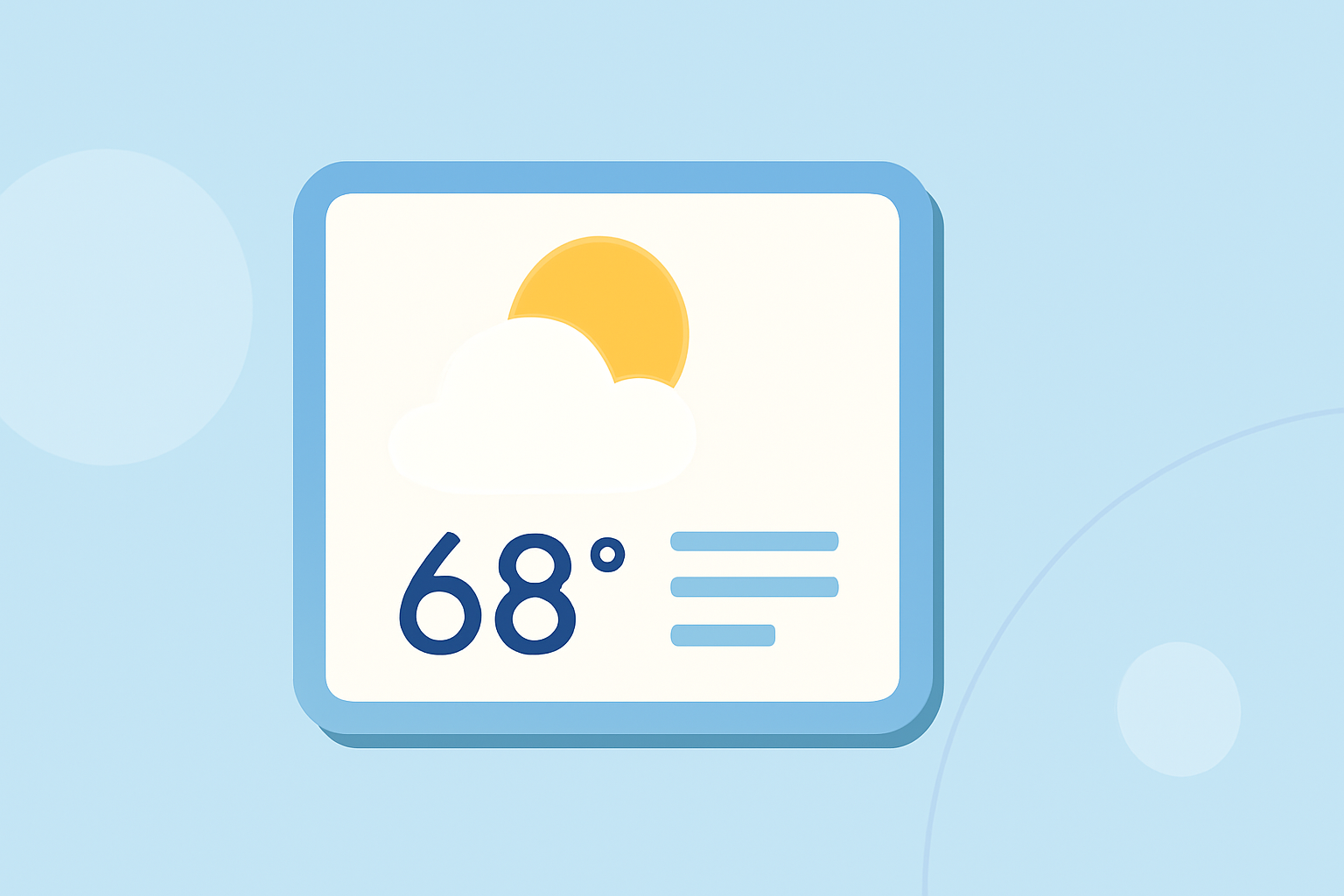
Weather widgets provide users with real-time weather information at a glance, making them a valuable addition to websites and applications. Customizing these widgets allows you to align them with your site's design and functionality, offering a seamless user experience.
1. Embedding a Basic Weather Widget
To integrate a weather widget into your website, you can embed it using an iframe. For instance, Weather & Radar offers a configurator that allows you to design a widget tailored to your preferences. You can select the size, corner radius, and outline of the widget, and then embed it using the provided HTML code. (weatherandradar.com)
2. Customizing Widget Appearance
Adjusting the appearance of your weather widget ensures it complements your website's design. Tools like Bootstrap 5 provide responsive weather templates that can be customized. You can modify elements such as temperature, wind speed, and humidity metrics, and choose from various icon packs to match your site's aesthetic. (mdbootstrap.com)
3. Building a Custom Weather Widget with Web Components
For a more tailored solution, consider creating a weather widget using Web Components. This approach allows you to design a widget that aligns perfectly with your site's theme and offers features like city selection and real-time weather data display. By leveraging Web Components, you can create reusable and encapsulated custom elements that enhance your website's functionality. (dzone.com)
4. Utilizing Dynamic Widgets with KWGT
If you're looking to customize widgets on your Android device, KWGT (Kustom Widget Maker) offers a powerful WYSIWYG editor. With KWGT, you can create dynamic and fully customized widgets that display weather information, system stats, and more. The app supports text, shapes, images, and advanced layers, allowing for intricate designs. Additionally, KWGT integrates weather data, system information, music, calendar events, and online sources, combined with conditional logic and animations for truly smart widgets. (en.androidguias.com)
5. Crafting a Customizable Weather Widget with Web Components
Developing a weather widget using Web Components enables you to create a reusable and encapsulated custom element. This approach allows for features like city selection, real-time weather data display, and dynamic styling, ensuring the widget aligns with your site's theme and functionality. (dzone.com)
6. Creating a Custom Weather Widget for iPhone
For iPhone users, creating a custom weather widget can enhance the home screen experience. By utilizing the Shortcuts app, you can design a widget that displays a representative image of the current weather conditions, updating multiple times a day. This method provides a clear visual representation of the weather, allowing users to see the current conditions at a glance. (howtogeek.com)
7. Integrating Weather Data into Your Application
Incorporating weather data into your application can be achieved by utilizing APIs that provide real-time weather information. By integrating these APIs, you can display current conditions, forecasts, and other relevant weather data within your app, offering users timely and accurate information.
By customizing weather widgets, you can enhance user engagement and provide valuable information in a visually appealing manner. Whether you're embedding a pre-designed widget, building one from scratch, or customizing existing options, tailoring the widget to your site's design and functionality is key to delivering a seamless user experience.